
Inherited a Classic Car?
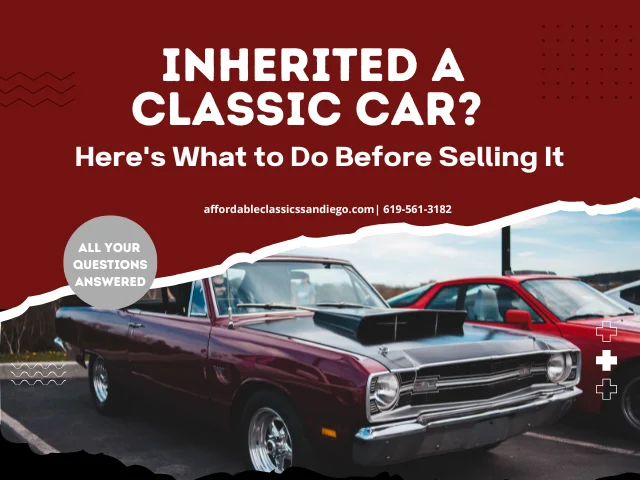
Inheriting a classic car can bring up a lot of questions.
Maybe the vehicle belonged to a parent, grandparent, or another family member who loved collecting cars.
Maybe it's been sitting in a garage for years.
Or maybe you suddenly find yourself responsible for a vehicle you know very little about.
You may appreciate the history behind it without necessarily wanting to keep it.
And that's perfectly reasonable.
If you're considering selling an inherited classic car, there are a few important things to understand before making a decision.
1. Start by Identifying What You Have
The first step is figuring out exactly what kind of classic car you've inherited.
Look for the basics:
-
Year
-
Make
-
Model
-
Vehicle identification number (VIN)
-
Engine and transmission information
-
Mileage, if known
-
Overall condition
-
Any special features or modifications
Don't worry if you aren't familiar with classic vehicles.
You don't need to become a collector overnight.
An experienced classic car buyer can help you understand which details matter when evaluating your vehicle.
2. Locate the Vehicle's Paperwork
Before selling an inherited classic, you'll want to understand who legally owns the vehicle and what documentation is required to transfer it.
Look for the title, registration, estate documents, and any paperwork related to the previous owner.
Depending on the state and circumstances, additional documentation may be necessary before the vehicle can be sold.
For example, the California Department of Motor Vehicles provides information about vehicle ownership transfers and title requirements.
If the vehicle is registered in another state, check with that state's motor vehicle agency for the applicable requirements.
Getting this information organized early can help prevent delays later.
3. Don't Assume an Old Car Isn't Valuable
One of the biggest mistakes someone can make with an inherited classic is assuming it's worth very little simply because it's old, dusty, or doesn't run.
Classic car values can vary dramatically.
A vehicle's value may depend on its rarity, originality, condition, factory options, restoration history, and current collector demand.
Even a car that's been sitting for years may have qualities that make it desirable to the right buyer.
Resources like Hagerty's Classic Car Valuation Tools can provide useful insight into collector vehicle values and market trends.
However, online estimates are only a starting point. The actual value of your vehicle depends on its specific condition, history, and the current market.
Before accepting an offer, take some time to understand what you have.
4. Gather Any Records and Spare Parts
If the previous owner was passionate about the vehicle, there may be valuable documentation stored nearby.
Look for:
-
Restoration receipts
-
Original manuals
-
Service records
-
Spare parts
-
Historical photographs
-
Build sheets
-
Previous ownership records
-
Original components
These items can help establish the vehicle's history and may be useful to a potential buyer.
Documentation can be particularly important when evaluating rare or highly original collector vehicles.
For example, Hagerty's vehicle condition guide explains how factors such as originality, documentation, and overall condition influence classic car valuations.
If you're unsure whether something belongs with the car, keep it together until you've had a chance to ask.
5. Be Careful About Starting the Vehicle
If the classic has been sitting unused for years, resist the temptation to simply add fuel and turn the key.
Old fuel, deteriorated hoses, dry seals, and other mechanical issues can create problems.
A qualified mechanic can help determine whether the vehicle is safe to start.
And remember, you don't necessarily need to get the car running before exploring a sale.
Some classic car buyers are interested in vehicles that need mechanical work.
Before spending money on repairs, consider whether selling the vehicle in its current condition might make more sense.
6. Decide Whether Keeping or Selling Makes Sense
Inheriting a classic car can come with emotional considerations.
Maybe the vehicle has sentimental value.
Maybe you have fond memories of riding in it.
But keeping a classic car also comes with responsibilities, including storage, insurance, maintenance, and potentially restoration costs.
There's no wrong answer.
Some families choose to preserve the vehicle. Others decide that selling it to someone who will enjoy it is the best option.
The important thing is making a decision that works for your circumstances.
7. Explore Your Selling Options
If you've decided to sell, you have several options.
You can list the vehicle privately, advertise it through an online marketplace, consider an auction, or contact a professional classic car buyer.
Each approach has advantages.
Selling privately may allow you to seek a higher price, but it also requires time, communication, negotiation, and coordination.
An auction may expose the car to a broad audience, but the result depends on bidding activity and any applicable fees.
Selling directly to an experienced buyer can be appealing if you'd prefer a more straightforward process.
If you're wondering about the best place to sell a classic car online, remember that the right choice depends on your priorities.
For some owners, reaching the largest possible audience matters most.
For others, avoiding listings, negotiations, and the uncertainty of waiting for a buyer is more important.
8. Choose a Buyer Who Understands Classic Cars
Not every vehicle buyer specializes in collector cars.
Classic vehicles have unique characteristics that affect their value.
Original components, restoration quality, production history, rarity, and current collector interest can all matter.
That's why working with someone familiar with the classic car market can be helpful.
Look for an established business that communicates clearly, understands collector vehicles, and explains the purchasing process.
If you're wondering whether your inherited vehicle is something a dealer might be interested in, take a look at Affordable Classics' Wanted Cars page.
It can give you a better idea of the types of classic and collector vehicles the team is currently seeking.
Affordable Classics Is Here to Help
At Affordable Classics, we buy and sell classic and collector vehicles.
We understand that not everyone who owns a classic car is an enthusiast or collector.
Sometimes a vehicle comes into your life unexpectedly, and you're simply trying to determine what to do next.
If you've inherited a classic car and are considering selling it, our team would be happy to learn more about the vehicle.
You don't need to know every technical detail.
Start with whatever information and photographs you have.
We'll review the vehicle and determine whether it's something we're interested in purchasing.
Thinking About Selling an Inherited Classic Car?
You don't have to navigate the collector car market alone.
Whether the vehicle is restored, original, running, or sitting in storage, we'd love to hear about it.
At Affordable Classics, we're always interested in discovering classic and collector vehicles that could become part of our inventory.
Tell us what you have, share a few photos, and let's start the conversation.