
Can You Sell a Classic Car That Doesn't Run?
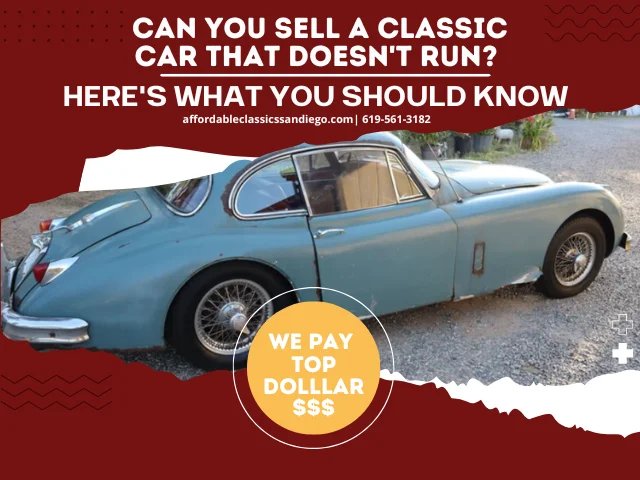
Maybe it's been sitting in your garage for years. Maybe you started restoring it but life got busy. Or maybe you inherited a classic car that hasn't turned over in decades.
Whatever the situation, you're probably wondering:
Can I actually sell a classic car that doesn't run?
The short answer? Absolutely.
Not every classic car needs to be road-ready to attract a buyer. In fact, some collectors and classic car buyers are specifically interested in vehicles that need a little work.
Before you spend thousands trying to get that old engine running, here's what you should know about selling a non-running classic car.
Does a Classic Car Have Value If It Doesn't Run?
Yes, but the value depends on several factors.
Unlike modern vehicles, classic cars aren't valued solely on mileage, age, or mechanical condition.
Some vehicles are desirable because of their rarity, original components, body style, historical significance, or restoration potential.
Condition plays a major role in collector vehicle pricing. Resources like Hagerty's classic car condition ratings help explain how vehicles are evaluated based on their overall condition, originality, and other characteristics.
A non-running classic might still have:
-
A desirable make and model
-
Rare factory options
-
An original engine or transmission
-
Valuable parts and components
-
A solid body and frame
-
Strong collector demand
-
Restoration potential
Of course, not every project car is valuable. Some require more work than they're worth.
The important thing is understanding what you have before assuming it's worthless.
Should You Fix Your Classic Car Before Selling It?
This is one of the biggest questions owners face.
You might think spending money on repairs will automatically increase your selling price.
But that isn't always the case.
Let's say your classic needs an engine rebuild, new brakes, or extensive bodywork. Those repairs could cost thousands of dollars, and there's no guarantee you'll recover the entire investment when you sell.
Before investing in repairs, it's worth understanding the potential expenses. Hagerty's guide to classic car restoration costs explains why restoration projects can become expensive and why those costs aren't always recovered when a vehicle sells.
So before committing to major repairs, consider speaking with an experienced classic car buyer.
You may discover that your vehicle is already desirable in its current condition.
Sometimes selling a project as-is makes more financial sense than trying to finish a restoration you no longer want to complete.
What Types of Non-Running Classic Cars Can Be Sold?
There are many reasons a classic car might not run.
Some have been stored for years. Others have mechanical problems or unfinished restoration work.
Common examples include:
-
Barn finds
-
Long-term garage projects
-
Vehicles with engine problems
-
Cars needing transmission work
-
Partially restored classics
-
Vehicles with missing components
-
Classic trucks needing restoration
-
Collector cars that haven't been driven in years
Whether a particular buyer is interested will depend on the vehicle itself.
That's why it's worth reaching out before assuming nobody will want it.
How Do You Determine What a Non-Running Classic Car Is Worth?
Researching comparable vehicles is a helpful starting point. Hagerty's Valuation Tools provide collector-car pricing information and market data. Just remember that a non-running vehicle may be worth considerably less than a comparable example in good running condition.
Several factors influence the value of a project car.
Make, Model, and Year
Some classic vehicles have stronger collector demand than others, even when they need restoration.
Body and Structural Condition
Rust, collision damage, and structural problems can significantly affect a vehicle's value.
Originality
Original engines, transmissions, trim, and other factory components may make certain vehicles more desirable.
Completeness
A car with its original components and supporting parts may be more appealing than one missing difficult-to-find pieces.
Restoration Costs
Buyers consider what it may cost to get the vehicle back on the road.
Market Demand
Collector interest changes over time, so current market conditions matter.
The best way to understand what your particular vehicle might be worth is to have someone familiar with classic cars evaluate it.
What's the Best Way to Sell a Non-Running Classic Car?
You have several options.
You can advertise the vehicle privately, list it on an online marketplace, or contact a professional classic car buyer.
Private sales can work, but selling a vehicle that doesn't run may introduce additional challenges.
Prospective buyers might want inspections, detailed photographs, information about missing parts, or transportation arrangements.
And because the vehicle can't simply be driven away, coordinating pickup can require additional planning.
For owners who don't want to manage the entire process themselves, contacting a company that buys classic cars directly can be a simpler starting point.
What Information Should You Have Ready?
You don't need to know everything about your classic before contacting a buyer.
Start with the basics:
-
Year, make, and model
-
Current condition
-
Whether the engine turns over
-
When the vehicle last ran
-
Known mechanical problems
-
Rust or body damage
-
Any missing components
-
Ownership documentation
-
Clear photographs
If you don't know the answers to every question, that's okay.
Be honest about what you know and what you don't.
Affordable Classics Buys Classic and Collector Cars
At Affordable Classics, we understand that not every classic car is a finished showpiece.
We're interested in hearing about collector vehicles in a variety of conditions, including projects and cars that may need work.
Whether you've been storing a vehicle for years, inherited an unfinished restoration, or simply decided it's time to move on, our team would love to learn more about what you have.
We buy and sell classic cars, and we're always looking for interesting vehicles that fit our inventory.
Have a Classic Car That Doesn't Run?
Don't assume you need to fix it before reaching out.
Your classic could be exactly the type of vehicle we're interested in purchasing.
Tell Affordable Classics about your car, share a few photos, and let us see if it's something we're looking to buy.