
The Iconic Oldsmobile 442
The late 1960s and early 1970s marked a golden era for muscle cars, and the Oldsmobile 442 stands out as one of the most memorable models from this period. A true embodiment of American automotive ingenuity and power, the Oldsmobile 442 left an indelible mark on the muscle car scene. Let's take a closer look at what made the Oldsmobile 442 from 1968-1972 such a standout vehicle.
Origins of the 442
Introduced in 1964 as a performance package for the Oldsmobile Cutlass, the 442 designation stood for "4-barrel carburetor, 4-speed manual transmission, and dual exhausts." By 1968, the 442 had evolved into its own distinct model. Known for its powerful engine options and muscular design, the 442 quickly gained a reputation as a formidable competitor in the muscle car market.
Engine and Performance
One of the defining features of the Oldsmobile 442 was its array of potent V8 engines. The 1968 model featured a standard 400 cubic inch (6.6L) V8 engine, producing 350 horsepower. This was no small feat, making the 442 one of the most powerful cars of its time. In 1970, Oldsmobile upped the ante with a 455 cubic inch (7.5L) V8 engine, delivering up to 365 horsepower and 500 lb-ft of torque. These engines ensured that the 442 wasn't just about looks; it had the performance to back up its aggressive stance.
Notable Engine Options:
- 1968-1969 Standard 400 cubic inch V8, 350 horsepower.
- 1970 Introduction of the 455 cubic inch V8, 365 horsepower.
- 1971-1972 Adjustments for emission standards, with continued emphasis on performance.
Design and Style
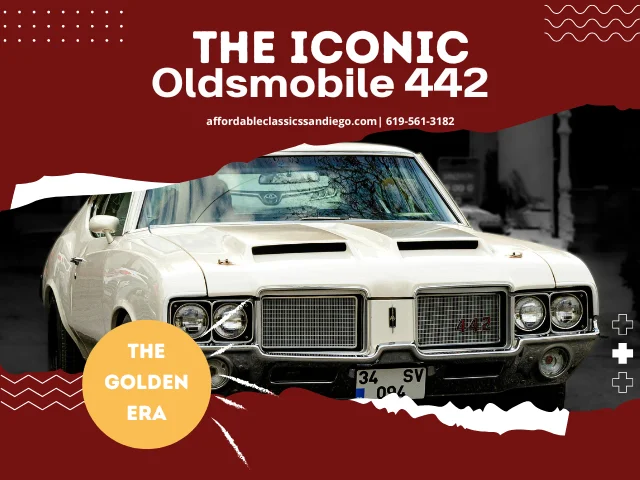
The Oldsmobile 442's design was as bold as its performance. Its aggressive front grille, sleek lines, and sporty profile set it apart from other muscle cars. The 442 featured distinctive badging, rally wheels, and optional hood scoops, which added to its commanding presence on the road. Interior comfort was not overlooked, with bucket seats and a stylish dashboard contributing to a high-quality driving experience.
Key Design Elements:
- Aggressive front grille and sleek body lines
- Distinctive 442 badging and rally wheels
- Optional hood scoops and sporty interior features
Racing Heritage
The racing pedigree of the Oldsmobile 442 is a testament to its engineering excellence. The car saw success in various drag races and competitions, earning respect in the muscle car community. Its robust engine and superior handling made it a favorite among racers and enthusiasts alike.
Notable Achievements:
- Participation in NHRA drag races
- Various regional and national victories in the late 1960s and early 1970s
Cultural Impact
The Oldsmobile 442 was more than just a car; it was a cultural icon. Its production years coincided with significant social and political movements, including the Civil Rights Movement, the Vietnam War, and the counterculture revolution. The 442 became a symbol of freedom and rebellion, reflecting the desires and aspirations of a generation seeking performance and style.
Historical Context:
- Muscle car renaissance driven by post-war economic prosperity
- Influence of major social and political movements of the late 1960s and early 1970s
- Impact of emission standards and fuel economy regulations towards the end of the era
Collector’s Appeal
Today, the Oldsmobile 442 is highly sought after by classic car collectors. Its combination of power, style, and historical significance makes it a prized possession. Original models in good condition can fetch high prices at auctions, and enthusiasts continue to celebrate and preserve this iconic muscle car.
Collector Highlights:
- High desirability among classic car collectors
- Strong market value for well-preserved models
- Continued celebration in classic car shows and events
Conclusion
The Oldsmobile 442 from 1968-1972 remains a legendary figure in the world of muscle cars. Its powerful engines, distinctive design, racing success, and cultural significance make it a timeless classic. For those passionate about automotive history, the Oldsmobile 442 is a testament to an era when American car manufacturing was at its peak.